Emotional intelligence in the workplace is becoming one of the most important leadership capabilities for small and medium sized businesses. A technically brilliant leader can know the systems, understand the work and solve complex problems quickly, but still struggle when it comes to empathy, feedback and stress.
That can be a hard thing to say, especially when someone has been promoted because they are excellent at what they do. They know the systems. They understand the work. They can solve complex problems quickly. They may have years of experience and a reputation for being the person everyone goes to when something needs to be fixed. But then they step into a leadership role.
Suddenly, the work is not just about solving the technical problem. It is about leading people through the problem and that is where many strong leaders start to struggle.
They may avoid giving feedback because they do not want to upset someone. They may become blunt or impatient when pressure increases. They may struggle to read the room, manage conflict, support wellbeing or adapt their communication style. They may care deeply about their team, but still come across as dismissive, defensive or disconnected.
This is why emotional intelligence in the workplace matters.
Emotional intelligence helps leaders understand themselves, understand others and use that awareness to lead with more clarity, empathy and confidence. Today , with businesses navigating constant change, rising pressure and more conversations about workplace wellbeing, it is no longer a nice to have leadership skill. It is part of how good leaders create performance that is sustainable.
What is emotional intelligence in the workplace?
Emotional intelligence in the workplace is the ability to recognise, understand and manage emotions in yourself and others, then use that awareness to communicate, make decisions and build stronger working relationships.
It is not about being soft, letting people do whatever they want, avoiding performance conversations or trying to keep everyone happy.
In a workplace context, emotional intelligence is practical. It shows up in the way a leader responds when someone makes a mistake. It shows up in how they give feedback, how they handle pressure, how they listen, how they manage conflict and how they help the team stay focused when things are uncertain.
A leader with strong emotional intelligence can still make hard decisions. They can still hold people accountable. They can still have high standards.
The difference is that they do it with self awareness, respect and emotional control.
Why technical expertise alone is not enough
Many businesses promote people into leadership roles because they are good at the technical part of their job, which makes sense at first.
If someone is great at operations, finance, sales, compliance, customer service or project delivery, it is natural to think they can lead others in that area.
But leadership requires a different skill set.
A technically strong employee can focus on doing the work well. A leader has to create the conditions for other people to do the work well.
That means they need to:
- Explain expectations clearly
- Give feedback without damaging trust
- Notice when someone is struggling
- Manage conflict early
- Support performance without micromanaging
- Stay calm under pressure
- Adapt to different personalities
- Make decisions when emotions are involved
- Balance care with accountability
This is where technical strength can become a leadership trap.
The leader may know the right answer, but struggle to bring people with them. They may move too quickly into problem solving before listening. They may become frustrated when others do not think the same way they do. They may assume that because something is obvious to them, it should be obvious to everyone else.
The result can be a team that is compliant, but not engaged.
People may do what they are told, but stop contributing ideas. They may avoid asking questions because they do not want to look silly. They may hold back concerns because they worry about the reaction. Over time, trust drops and the leader wonders why the team is not more proactive.
Often, the issue is not capability. It is emotional intelligence.
Watch Karen explain why technically strong leaders can still struggle with empathy, feedback and stress, and how emotional intelligence helps them lead more effectively.
The leadership and wellbeing connection
The conversation about leadership and wellbeing has shifted.
For a long time, workplace wellbeing was treated as something separate from leadership. It sat in programs, benefits or occasional initiatives. But today, more organisations are recognising that wellbeing is shaped every day by the way work is designed, how leaders communicate and whether people feel supported to do their best work.
Research from DDI’s Global Leadership Forecast found that 71 percent of leaders reported increased stress, 54 percent were concerned about burnout and only 30 percent felt they had enough time to fulfil their responsibilities. That matters because stressed leaders often become reactive leaders, even when they have good intentions.
Global Wellness Institute also identifies a shift from standalone wellbeing programs toward embedding wellbeing into leadership practices, performance management and organisational design. In other words, wellbeing is not just about offering support after people are overwhelmed. It is about building healthier ways of working into the way leaders lead.
This is where emotional intelligence becomes very practical.
A leader who understands their own stress signals is more likely to pause before reacting. A leader who can notice when a team member is withdrawing is more likely to check in early. A leader who can hold a feedback conversation with empathy and clarity is more likely to improve performance without creating unnecessary fear or resentment.
That does not mean leaders need to become counsellors. It means they need the emotional skills to lead humans, not just workflows.
What happens when leaders lack emotional intelligence?
When a leader lacks emotional intelligence, the impact is often subtle at first.
There may not be one dramatic moment. Instead, small patterns build over time.
Feedback is delayed because the leader feels uncomfortable. A team member keeps underperforming because no one has clearly named the issue. Meetings become tense because the leader reacts defensively to challenge. People stop raising concerns because previous conversations did not feel safe. The leader takes on too much because they do not trust others to do the work properly.
Eventually, the team starts to feel it.
You might notice:
- People waiting to be told what to do
- Less honesty in meetings
- Feedback being avoided or delivered too harshly
- Stress spreading from the leader to the team
- Conflict going underground
- Good employees becoming disengaged
- High performers feeling unsupported
- Decisions being made without enough input
- A culture of walking on eggshells
None of this means the leader is a bad person.
In many cases, they are trying hard. They care about the business. They want the team to succeed.
But without emotional intelligence, leaders can unintentionally create the very problems they are trying to solve.

Leadership workshops give managers space to practise empathy, feedback and stress management in real workplace scenarios.
The three areas where technically strong leaders often struggle
There are three areas where I often see technically strong leaders get stuck: empathy, feedback and stress.
These are not separate issues, they are connected.
When stress is high, empathy often drops. When empathy drops, feedback can become blunt or avoidant. When feedback is poor, performance and trust suffer. Then the leader feels even more pressure.
That cycle can become exhausting for everyone.
Empathy: understanding people without lowering standards
Empathy is often misunderstood.
Some leaders worry that being empathetic means being too soft. They think if they show too much understanding, people will take advantage or performance standards will slip.
But empathy does not mean removing accountability.
Empathy means taking the time to understand what may be happening for another person, so you can respond appropriately.
For example, imagine a team member has missed several deadlines. A low empathy response might be:
“You need to get better at managing your time.”
That might be true, but it may not be useful.
An emotionally intelligent response might be:
“I have noticed the last three deadlines have slipped. Help me understand what is getting in the way.”
This opens the door to information. Maybe the person is unclear on priorities. Maybe they are overloaded. Maybe they lack capability. Maybe they are avoiding the task. Maybe there is something happening outside work.
Once the leader understands the situation, they can still set a clear expectation.
“Thanks for explaining that. We still need this work completed by Friday. Let’s look at what needs to shift so that can happen.”
That is empathy with accountability. It is not soft. It is effective.
Feedback: saying what needs to be said with clarity and respect
Feedback is one of the biggest emotional intelligence tests for leaders.
Many technically strong leaders struggle with it because feedback is not just a task. It is an interpersonal moment.
There is emotion involved. The employee may feel embarrassed, defensive or disappointed. The leader may feel awkward, frustrated or anxious. If the leader is not aware of those emotions, the conversation can go sideways quickly.
Some leaders avoid feedback until the issue becomes too big to ignore. Others deliver feedback in a way that is so blunt the person shuts down. Both approaches create problems.
Emotionally intelligent feedback is timely, clear and respectful.
It focuses on behaviour, impact and next steps.
For example:
“I noticed that in yesterday’s client meeting, you interrupted Tori several times while she was explaining the project risks. The impact was that we did not get the full picture before making a decision. In the next meeting, I would like you to pause before responding and let each person finish their point.”
This type of feedback is specific. It does not attack the person. It explains the impact. It gives a practical next step. That is the kind of feedback that helps people grow.
Stress: leading yourself before leading others
Stress is contagious in leadership. When leaders are under pressure, their team often feels it.
A stressed leader may become short, withdrawn, controlling or inconsistent. They may fire off abrupt messages, cancel one on ones, stop listening properly or make rushed decisions. Sometimes they do not even realise they are doing it.
This is why emotional self awareness is so important.
A leader needs to know:
- What happens to me when I am under pressure?
- How do I show stress to my team?
- Do I become more controlling?
- Do I avoid conversations?
- Do I become impatient?
- Do I stop asking for input?
- What does my team experience when I am stretched?
These are not always comfortable questions, but they are necessary.
The aim is not to remove stress from leadership, but to help leaders recognise stress earlier and respond with more intention.
How EQ-i 2.0 helps leaders understand emotional intelligence
One of the reasons we use EQ-i 2.0 at Amplify HR is that it makes emotional intelligence more practical.
Instead of talking about emotional intelligence as a broad concept, EQ-i 2.0 breaks it into areas leaders can understand and develop.
The EQ-i 2.0 model looks at five core areas:
- Self perception
- Self expression
- Interpersonal skills
- Decision making
- Stress management
These areas are then broken down into 15 subscales, including empathy, assertiveness, emotional self awareness, reality testing, impulse control, flexibility, stress tolerance and optimism.
For a leader, this can create useful insight.
For example, a leader may discover they have strong problem solving and assertiveness, but lower empathy. That might explain why they move quickly to solutions, but team members do not always feel heard.
Another leader may have strong empathy and interpersonal relationships, but lower assertiveness. That might explain why they are supportive and trusted, but avoid direct feedback or struggle to set boundaries.
Another may have high stress tolerance, which sounds positive, but if it is not balanced with emotional self awareness, they may push through pressure for too long and miss the signs that the team is struggling.
The real value of EQ-i 2.0 is not the score but in the conversation it creates.
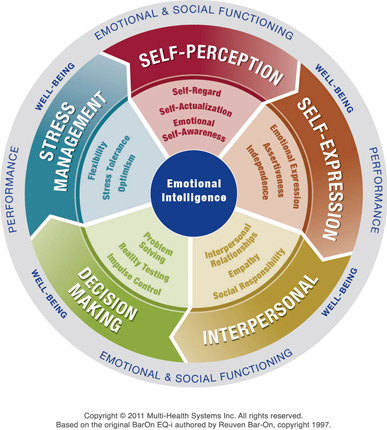
The EQ-i 2.0 assessment explores five core areas that influence how leaders communicate, make decisions and respond to workplace challenges.
EQ-i examples for common leadership challenges
Here are a few examples of how emotional intelligence can show up in everyday leadership.
The technically brilliant problem solver
This leader sees the answer quickly. They are efficient, logical and decisive.
That strength is useful, but if their empathy or interpersonal relationships are lower, they may unintentionally make people feel dismissed. Their team may stop contributing ideas because the leader always seems to have the answer already.
Development focus: slow down, ask better questions and listen before solving.
The supportive leader who avoids hard conversations
This leader cares deeply about people. They want the team to feel safe and supported.
That strength is valuable, but if assertiveness is lower, they may avoid giving feedback or delay performance conversations. The result is often more confusion, not less.
Development focus: practise clear, kind and timely feedback.
The calm leader who keeps pushing through
This leader has high stress tolerance. They stay steady under pressure and keep going when things are difficult.
That strength can help a team feel stable, but if emotional self awareness is lower, they may not notice the cost of sustained pressure, either for themselves or their team.
Development focus: check in earlier, name pressure more openly and build recovery into the rhythm of work.
The passionate leader who reacts quickly
This leader is expressive, committed and energised. People know where they stand.
That strength can create momentum, but if impulse control or reality testing is lower, they may react too quickly in tense moments or make decisions before they have all the information.
Development focus: pause, test assumptions and separate emotion from action.
These examples show why emotional intelligence is not about becoming one type of leader.
It is about understanding your patterns and building the skills that help you lead more effectively.
Emotional intelligence can be developed
One of the most encouraging things about emotional intelligence is that it can be developed.
Leaders do not need to be perfect, they need to be willing to notice their behaviour, understand their impact and practise new ways of responding.
Development might include:
- Building self awareness through reflection or assessment
- Asking for feedback from trusted people
- Practising better listening
- Learning how to give clear feedback
- Developing emotional regulation strategies
- Improving one on one conversations
- Understanding personal stress patterns
- Building confidence in difficult conversations
Small changes can make a big difference.
A leader who pauses before responding can change the tone of a whole meeting. A leader who asks one better question can uncover the real issue. A leader who gives feedback earlier can prevent months of frustration.
That is the practical power of emotional intelligence in the workplace.
How businesses can build emotional intelligence in leaders
If you want to build emotional intelligence across your leadership team, do not leave it to chance. Most leaders need structure, support and practice.
Here are some practical ways to start.
Use leadership development workshops
Workshops give leaders the chance to learn together, practise skills and have conversations they may not have in the day to day busyness of work.
A strong emotional intelligence workshop can help leaders explore:
- How emotional intelligence affects leadership behaviour
- How to balance empathy and accountability
- How to give clearer feedback
- How stress affects communication and decision making
- How to build trust through everyday leadership habits
- How to support wellbeing without taking responsibility for everything
- How to create a practical personal development plan
At Amplify HR, we can use EQ-i 2.0 as part of a leadership development workshop so leaders are not just learning theory. They are reflecting on their own emotional intelligence profile and applying the insights to real workplace situations.
Support managers with coaching
Some leadership behaviours need individual support. A workshop may create awareness, but coaching helps the leader apply that awareness to their specific role, team and challenges.
Coaching can be especially useful for leaders who are:
- New to management
- Moving from technical expert to people leader
- Struggling with feedback conversations
- Leading through change
- Managing conflict
- Experiencing high stress
- Preparing for a more senior role
Create better feedback habits
Emotional intelligence grows when leaders practise. That means feedback should not only happen during annual reviews or when something has gone wrong.
Encourage leaders to build regular feedback habits, such as:
- Weekly or fortnightly one on ones
- Clear expectations at the start of work
- Quick recognition when something goes well
- Early conversations when something is off track
- Asking team members what support they need
- Reflecting on the impact of their own communication
The goal is to make feedback normal, not scary.
Talk about stress before it becomes burnout
In many workplaces, stress is only discussed once people are already overwhelmed.
Emotionally intelligent leadership means noticing the signs earlier.
That might mean leaders regularly asking:
- What is feeling heavy at the moment?
- Are priorities clear?
- What is getting in the way of doing good work?
- Where are we creating unnecessary pressure?
- What needs to be paused, changed or clarified?
These questions do not remove all pressure, but they help leaders manage it more consciously.
Measure emotional intelligence when you need deeper insight
Sometimes, a business can see that leadership development is needed, but it is not clear where to start.
This is where an emotional intelligence assessment can help.
EQ-i 2.0 and EQ360 can provide a structured way to understand leadership strengths, blind spots and development priorities.
EQ-i 2.0 is useful for individual self awareness and development. EQ360 adds feedback from others, helping leaders compare how they see themselves with how others experience them.
This can be particularly valuable for technically strong leaders who may not realise how their behaviour is landing with the team.
If you are interested in measuring emotional intelligence in a practical way, you can learn more about our EQ-i 2.0 and EQ360 emotional intelligence assessments by booking a free discovery call.
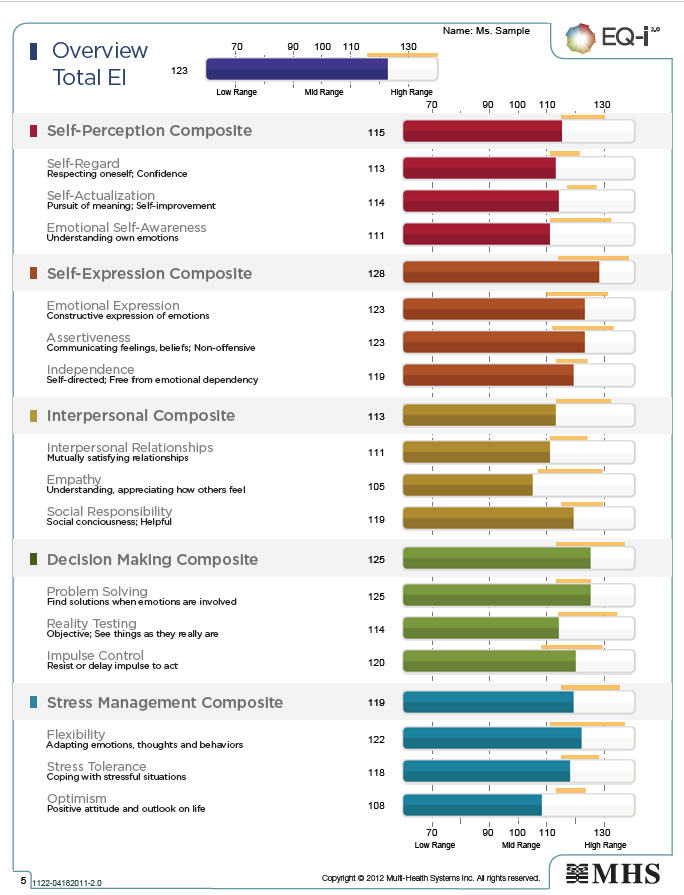
The EQ-i 2.0 report helps leaders understand their emotional intelligence strengths, development areas and practical next steps.
When should a business invest in emotional intelligence development?
You may want to invest in emotional intelligence development if you are noticing patterns like these:
- Managers avoid hard conversations
- Feedback is inconsistent or unclear
- Leaders are technically strong but struggle with people issues
- Team members do not speak honestly in meetings
- Stress is affecting communication
- Conflict keeps resurfacing
- Employees are disengaged or withdrawing
- Good people are leaving because of their manager experience
- Leaders are moving into more senior roles without enough support
- Growth or change is putting pressure on the team
These issues rarely fix themselves, they often become more visible as the business grows.
The earlier you support leaders to build emotional intelligence, the easier it is to create a workplace where people can perform well and stay well.
Emotional intelligence is a business skill
It is tempting to think of emotional intelligence as a personal quality.
Some people have it. Some people do not.
But that is not the case. Emotional intelligence is a business skill that can be developed. It affects communication, performance, engagement, retention, wellbeing and culture.
When leaders build emotional intelligence, they become better equipped to handle the human side of work.
They can still be commercially focused, make difficult decisions and expect high performance, but they do it in a way that builds trust instead of eroding it.
For small and medium sized businesses, this matters enormously. You may not have layers of management or endless resources. The behaviour of each leader has a direct impact on the employee experience. One emotionally intelligent leader can lift a team. One emotionally unaware leader can create months of frustration, turnover and lost productivity.
That is why developing emotional intelligence in the workplace is not just a leadership trend.
It is part of building a healthier, stronger and more sustainable business.
Ready to build emotionally intelligent leaders?
If your managers are technically strong but struggling with empathy, feedback or stress, they may not need more technical training.
They may need support to become more emotionally effective leaders.
Amplify HR works with small and medium sized businesses to build practical leadership capability through coaching, EQ-i 2.0 and EQ360 assessments, and tailored leadership development workshops.
We can help your leaders understand their emotional intelligence, develop more confidence in people conversations and create healthier ways of working.
Learn more about our leadership development workshops or Book a free discovery call today!
Original posted July 12, 2017, Updated 15 May 2026
FAQs
What is emotional intelligence in the workplace?
Emotional intelligence in the workplace is the ability to understand and manage emotions in yourself and others, then use that awareness to communicate, make decisions, manage stress and build effective working relationships. For leaders, it can affect how they give feedback, build trust, handle conflict and support team performance.
Why do technically strong leaders struggle with emotional intelligence?
Technically strong leaders are often promoted because they are excellent at solving problems and delivering work. But leading people requires a different skill set. They may need support to build empathy, give clear feedback, manage stress and understand how their communication affects the team.
Can emotional intelligence help with workplace wellbeing?
Yes. Emotional intelligence can support workplace wellbeing by helping leaders recognise stress, communicate with empathy, respond rather than react and create safer conversations about workload, pressure and support. It does not replace proper wellbeing systems, but it helps leaders shape healthier day to day team experiences.
How can businesses improve emotional intelligence in leaders?
Businesses can improve emotional intelligence in leaders through coaching, leadership development workshops, feedback practice and tools such as EQ-i 2.0 or EQ360. The goal is to help leaders better understand their strengths, blind spots and behaviour patterns, then practise more effective ways to lead.